Halal Certification
Independent Certification for Access to Global Halal Markets
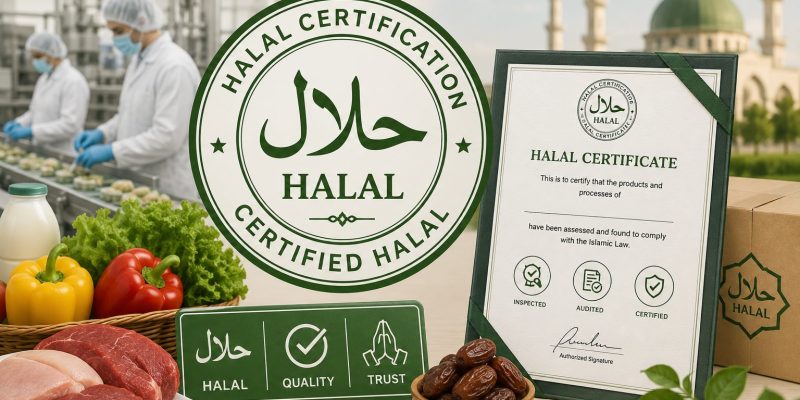
Halal certification demonstrates that products, ingredients, and manufacturing processes comply with applicable Halal requirements and are suitable for distribution in markets where Halal compliance is required or expected.
Danem Test supports food manufacturers, ingredient suppliers, beverage producers, cosmetics companies, pharmaceutical manufacturers, and other consumer goods businesses throughout the Halal certification process. Our specialists provide practical guidance from the initial project assessment through documentation review, audit preparation, and certification, helping organizations meet the requirements of their target markets.
Because Halal certification schemes vary between countries and certification authorities, defining the appropriate certification scope and applicable requirements at the beginning of the project is essential. Our project-based approach helps organizations establish clear certification objectives, reduce compliance risks, and prepare efficiently for third-party audits.
our approach to Halal certification
Certification typically includes the assessment of:
Raw materials, ingredients, and additives
Supplier approvals and material traceability
Production processes and contamination controls
Cleaning and segregation procedures
Storage, packaging, and labeling
Quality management and documented procedures
Depending on the target market, certification may apply to food and beverages, ingredients, food contact materials, cosmetics, pharmaceuticals, and other consumer products.
Our services include:
Independent Halal certification
Technical review of ingredients and production processes
Support for food, beverage, cosmetics, pharmaceutical, and consumer product manufacturers
Audit preparation and documentation review
Guidance on international Halal certification schemes
Ongoing support for surveillance and recertification
By combining technical expertise with a structured certification process, Danem Test helps organizations demonstrate compliance, strengthen customer confidence, and expand into global Halal markets.
ISO Halal CERTIFICATION
Project Scope Assessment
We identify the target market, applicable Halal certification scheme, product categories, and project objectives to define the certification scope.
Documentation and Ingredient Review
Our specialists evaluate ingredients, raw materials, supplier documentation, manufacturing processes, and supporting evidence to identify potential compliance gaps.
Audit Preparation
We review production controls, traceability systems, segregation procedures, hygiene practices, and documented processes to prepare your organization for the certification audit.
Certification and Ongoing Compliance
Following successful assessment, certification is completed in accordance with the applicable scheme. We also support organizations with surveillance activities, certification renewals, and ongoing compliance requirements.
WHY DANEM TEST & CERTIFICATE
- Global Expertise
International team supporting certification and compliance projects worldwide - Independent Assessment
Transparent and impartial certification, testing, and audit processes - Prompt communication and fast response times. Faster certification and testing processes through responsive communication, streamlined workflows, and continuous project oversight.
- Structured Certification Pathways
Clear project planning from assessment through approval - Technical & Regulatory Knowledge
Support across certification, testing, regulatory requirements, and market access.
FAQ
ask us
anything
What is Halal certification, and why is it important?
Halal certification is an independent confirmation that products, ingredients, and manufacturing processes comply with the requirements of an applicable Halal certification scheme. It helps manufacturers demonstrate compliance with market requirements, build customer confidence, and access countries or retailers where Halal-certified products are required or preferred.
Is Halal certification mandatory?
Halal certification is generally voluntary. However, it is often required by customers, distributors, retailers, or government authorities in many Muslim-majority countries and can be an important market access requirement for exporting products internationally.
What documents are typically required for Halal certification?
Typical documentation includes product specifications, ingredient lists, supplier declarations or certificates, manufacturing flow diagrams, cleaning procedures, traceability records, labeling information, and quality management documentation. Additional documents may be required depending on the certification scheme and product category.
How long does the Halal certification process usually take?
The certification timeline depends on the number of products, manufacturing complexity, documentation readiness, and audit scheduling. Well-prepared organizations can often complete the process within a few weeks, while more complex facilities or multiple production sites may require additional time.
Can existing production facilities be Halal certified, or is a separate production line required?
In many cases, existing production facilities can be Halal certified without establishing a separate production line, provided that effective controls are implemented to prevent cross-contamination and ensure compliance with the applicable Halal certification scheme. Depending on the products manufactured, this may include validated cleaning procedures, material segregation, traceability, and documented production controls. The specific requirements are determined during the certification assessment.