Carbon Footprint & CBAM Verification
Independent Verification of Greenhouse Gas Statements and Carbon Footprint Reporting
Reliable greenhouse gas reporting requires transparent methodologies, accurate calculations, and objective verification. Danem Test supports organizations with independent carbon footprint verification services, helping demonstrate the credibility of environmental data for customers, regulatory authorities, investors, and other stakeholders.
Our specialists perform verification activities in accordance with ISO 14065, supporting organizations throughout the verification process—from defining the reporting scope and reviewing emissions data to evaluating supporting evidence and issuing verification conclusions. Every project is tailored to the organization’s reporting objectives, operational boundaries, and applicable reporting framework.
Whether your objective is regulatory compliance, sustainability reporting, customer requirements, ESG initiatives, or participation in international supply chains, we help ensure that greenhouse gas information is complete, consistent, transparent, and supported by verifiable evidence.
About ISO 14065
ISO 14065 specifies the principles and requirements for organizations performing validation and verification of environmental information, including greenhouse gas (GHG) statements and carbon footprint reporting. The standard establishes requirements for competence, impartiality, consistency, and transparency throughout the verification process, providing confidence in the reliability of reported environmental information.
Carbon footprint verification is typically performed using recognized quantification and reporting methodologies, such as the ISO 14064 family of standards, with ISO 14065 defining the framework for independent verification activities.
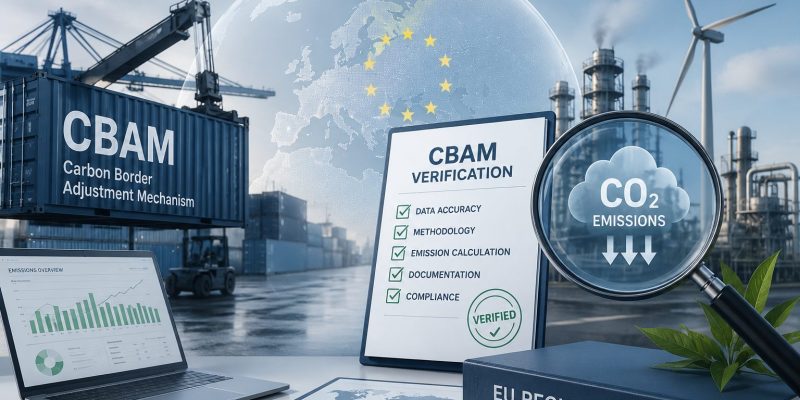
CBAM Pre-Verification
As the EU Carbon Border Adjustment Mechanism (CBAM) moves toward full implementation, the accuracy of embedded greenhouse gas emissions data has become a critical factor for exporters supplying the European market. Reliable emissions reporting is no longer simply a reporting obligation. It is an essential element of regulatory compliance, commercial competitiveness, and supply chain transparency. CBAM Pre-Verification is particularly valuable for manufacturers and exporters operating in sectors currently covered by the CBAM Regulation, including:
Iron and steel
Aluminium
Cement
Fertilisers
Hydrogen
Electricity
Danem Test offers CBAM Pre-Verification services to help manufacturers assess the quality and completeness of their emissions data before formal verification or regulatory submission. This independent readiness assessment enables organizations to identify methodological inconsistencies, calculation errors, reporting gaps, and missing evidence before they affect official verification outcomes.
Our experts review reporting boundaries, calculation methodologies, activity data, emission factors, and supporting documentation to evaluate alignment with current CBAM reporting requirements. Early assessment helps organizations improve data quality, reduce verification risks, and prepare for future regulatory obligations with greater confidence. By identifying potential issues before formal verification, organizations can strengthen the credibility of their emissions reporting, improve communication with European customers, and facilitate a smoother transition to mandatory CBAM compliance.
Our Verification Process
Scope Definition
We define the reporting boundary, intended use of the greenhouse gas statement, applicable standards, verification criteria, and project objectives.
Data Review
Our specialists assess activity data, calculation methodologies, emission factors, supporting documentation, and data traceability to identify potential gaps before verification begins.
Independent Verification
Verification activities are performed to evaluate whether greenhouse gas information is complete, accurate, consistent, and supported by sufficient objective evidence in accordance with applicable requirements.
Verification Statement
Upon successful completion of the verification process, a verification statement and supporting documentation are prepared for use in sustainability reporting, regulatory programs, customer requirements, or other applicable purposes.
WHY DANEM TEST & CERTIFICATE
- Global Expertise
International team supporting certification and compliance projects worldwide - Independent Assessment
Transparent and impartial certification, testing, and audit processes - Prompt communication and fast response times. Faster certification and testing processes through responsive communication, streamlined workflows, and continuous project oversight.
- Structured Certification Pathways
Clear project planning from assessment through approval - Technical & Regulatory Knowledge
Support across certification, testing, regulatory requirements, and market access.
FAQ
ask us
anything
What is the difference between carbon footprint calculation and verification?
Calculation is the quantification of emissions; verification is an independent assessment of whether the data, methods, and evidence support a credible statement suitable for its intended use.
Which standard should we use: ISO 14064-1 or ISO 14067?
ISO 14064-1 is commonly used for organizational GHG inventories, while ISO 14067 focuses on product carbon footprint. Your choice depends on whether you report at company level or product level.
What is the difference between Carbon Footprint Verification and CBAM Verification?
Although both services involve the assessment of greenhouse gas (GHG) emissions, they serve different purposes and are based on different reporting requirements.
Carbon Footprint Verification is a broader process used to independently verify greenhouse gas emissions for an organization, product, or project. It is typically performed in accordance with standards such as ISO 14064 and ISO 14065 and supports sustainability reporting, ESG initiatives, customer requirements, and voluntary climate commitments.
CBAM Verification, on the other hand, is specifically related to the European Union’s Carbon Border Adjustment Mechanism (CBAM). It focuses on verifying the embedded greenhouse gas emissions of products covered by the CBAM Regulation that are exported to the EU. The objective is to ensure that emissions calculations and supporting data comply with the methodology and reporting requirements established under the CBAM framework.
In summary, carbon footprint verification provides independent assurance of greenhouse gas data for a wide range of environmental and business purposes, while CBAM verification is a product-specific regulatory requirement designed to support compliance with EU carbon border legislation.
Why does my company need CBAM Pre-Verification, and what are its benefits?
CBAM Pre-Verification is a proactive readiness assessment that helps organizations identify and resolve potential issues in their embedded emissions reporting before undergoing formal CBAM verification or submitting data to EU importers.
By reviewing calculation methodologies, reporting boundaries, activity data, emission factors, and supporting documentation in advance, companies can detect inconsistencies, correct data gaps, and improve the overall quality and traceability of their emissions reporting. This reduces the risk of delays, additional verification work, or challenges during the official verification process.
An additional benefit of CBAM Pre-Verification is that it provides a more reliable basis for estimating future CBAM-related financial obligations. By validating embedded emissions calculations at an early stage, organizations can better understand the potential carbon costs associated with exports to the European Union, evaluate the financial impact on their products, and make informed decisions regarding pricing, sourcing, production improvements, and decarbonization strategies.
Beyond regulatory readiness, CBAM Pre-Verification also strengthens confidence among European customers and business partners by demonstrating that emissions data has been independently reviewed before submission. For exporters of CBAM-covered products, it is an effective risk management tool that supports smoother market access, greater reporting accuracy, and improved preparedness for the long-term requirements of the EU Carbon Border Adjustment Mechanism.
How long does carbon footprint verification take?
Timelines depend on scope size, data quality, and readiness of evidence. A structured readiness review upfront is the best way to keep the verification schedule predictable.